
Introduction
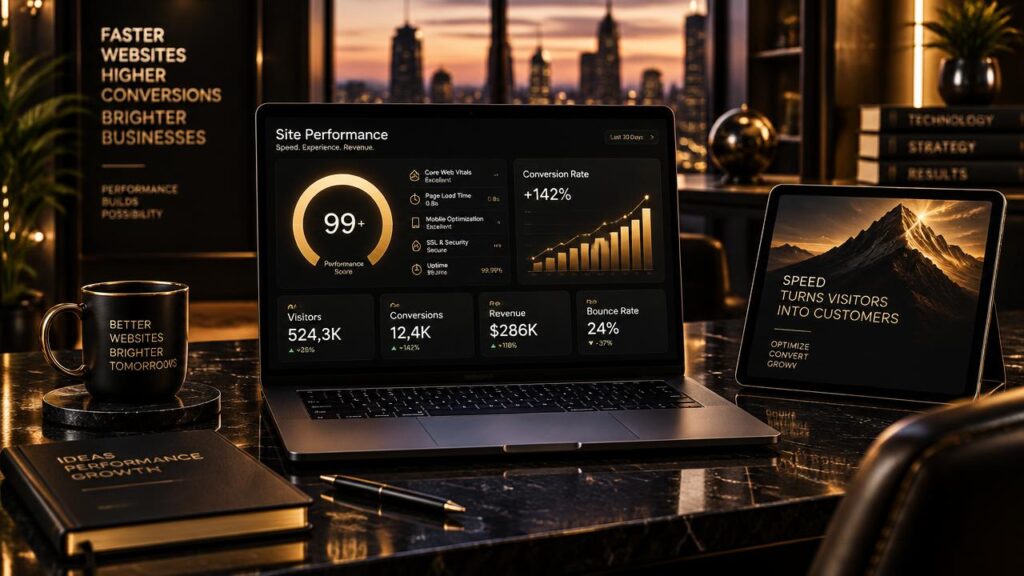
In the digital economy, your website is often the first interaction a potential client has with your brand. Whether a visitor lands on your page through an organic search, a referral, or a high-intent performance ad, their impression is formed in milliseconds.
For growing businesses, slow website performance is not just an IT annoyance—it is a silent revenue leak that damages customer experience and burns paid advertising budgets.
1. Speed Builds Immediate Credibility and Trust
Perception shapes value. When a visitor navigates a web application that transitions smoothly, loads graphics without stutter, and processes form inputs instantly, they immediately feel that the company behind it is professional, reliable, and technologically capable.

On the other hand, sluggish performance creates psychological friction:
- Users question whether the checkout or form submission will fail.
- They worry about payment and data security.
- They often assume an unoptimized website reflects a disorganized business, turning to competitors instead.
- A fast website eliminates doubts before the user even begins reading your value proposition.
2. The Hidden Cost on Paid Ads (ROAS & Cost Per Click)
Many business owners invest heavily in Google Ads, Meta campaigns, and LinkedIn performance marketing, only to wonder why conversion rates remain flat. The culprit is almost always landing page performance.
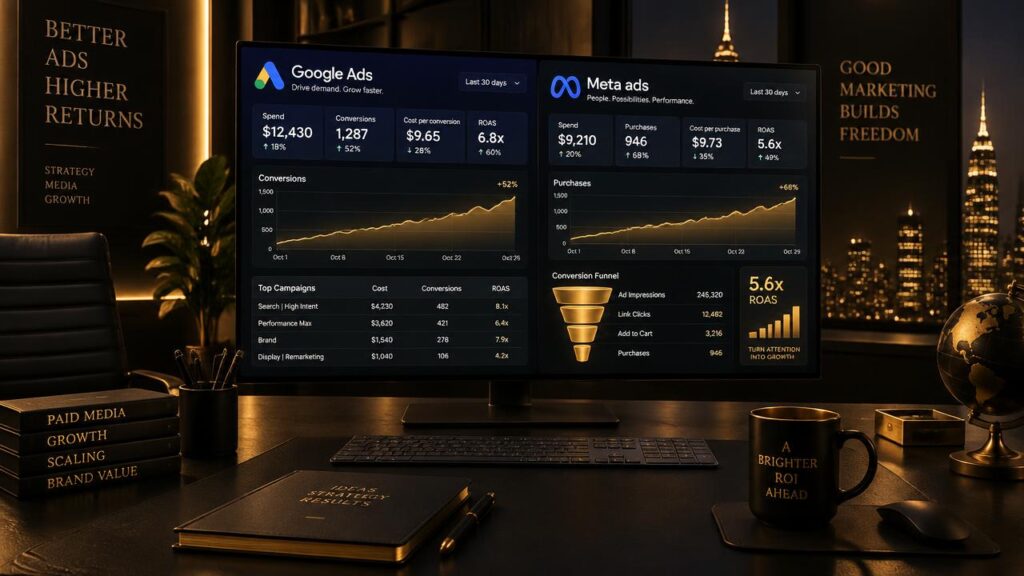
- Lower Quality Scores: Ad platforms measure user post-click experience. Slow-loading pages receive lower quality and relevance scores, forcing you to pay higher Cost-Per-Click (CPC) rates for the exact same traffic.
- Wasted Ad Spend: Every time an ad click results in a bounce before the page loads, that ad dollar is lost with zero opportunity for conversion.
- The 1-Second Penalty: Industry research consistently demonstrates that every single second of page load delay reduces conversion rates by up to 7%. For a business generating $50,000 monthly online, a one-second delay can mean losing over $40,000 in annual revenue.
3. Mobile-First Optimization: Where Most Sites Fail
More than 60% of modern web traffic originates from mobile devices, frequently operating over cellular networks with fluctuating bandwidth. A website that appears fast on a high-speed office fiber connection may take six to ten seconds to render on a smartphone.
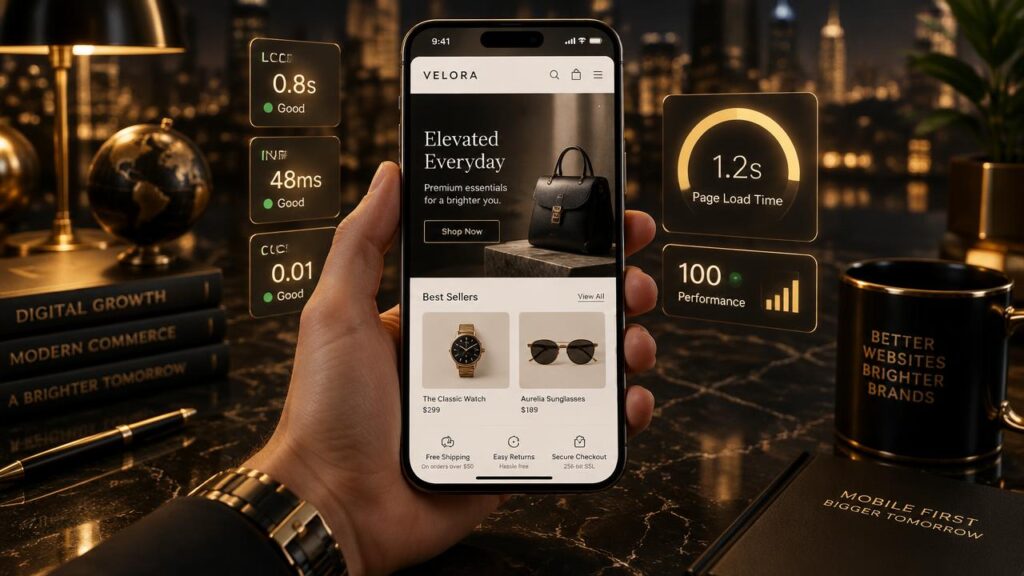
Common pitfalls that ruin mobile customer experience include:
- Uncompressed, full-resolution image assets that devour mobile bandwidth.
- Cumulative Layout Shifts (CLS) where text or buttons jump around while loading, causing accidental clicks.
- Heavy JavaScript bundles that overheat mobile processors and stall interactivity.Optimizing for mobile is no longer a design feature—it is the baseline for retaining real customers.
4. How to Engineer a High-Performing Website

Achieving top-tier speed requires deliberate architecture, not quick fixes. Here are the core technical priorities:
- Modern Frontend Frameworks: Utilize lean component architectures and server-side rendering (SSR) so users receive visible content immediately.
- Next-Gen Asset Formats: Convert standard PNG/JPEG files to lightweight WebP or AVIF formats, serving responsive resolutions based on the user's screen.
- Global CDN Deployment: Distribute content across global edge networks so servers respond from the geographic location closest to the visitor.
- Code Splitting & Lazy Loading: Load only the code and images needed for the current screen, fetching secondary assets only when the user scrolls.
- Regular Core Web Vitals Auditing: Track Largest Contentful Paint (LCP), Interaction to Next Paint (INP), and Cumulative Layout Shift (CLS) on a monthly basis.
Conclusion
Your website is the central engine of your digital presence. No amount of compelling copywriting or aggressive ad spending can compensate for an experience that frustrates visitors before they have a chance to engage.
By investing in clean code, optimal infrastructure, and performance-focused engineering, you protect your advertising spend, delight your visitors, and turn casual traffic into loyal clients.